
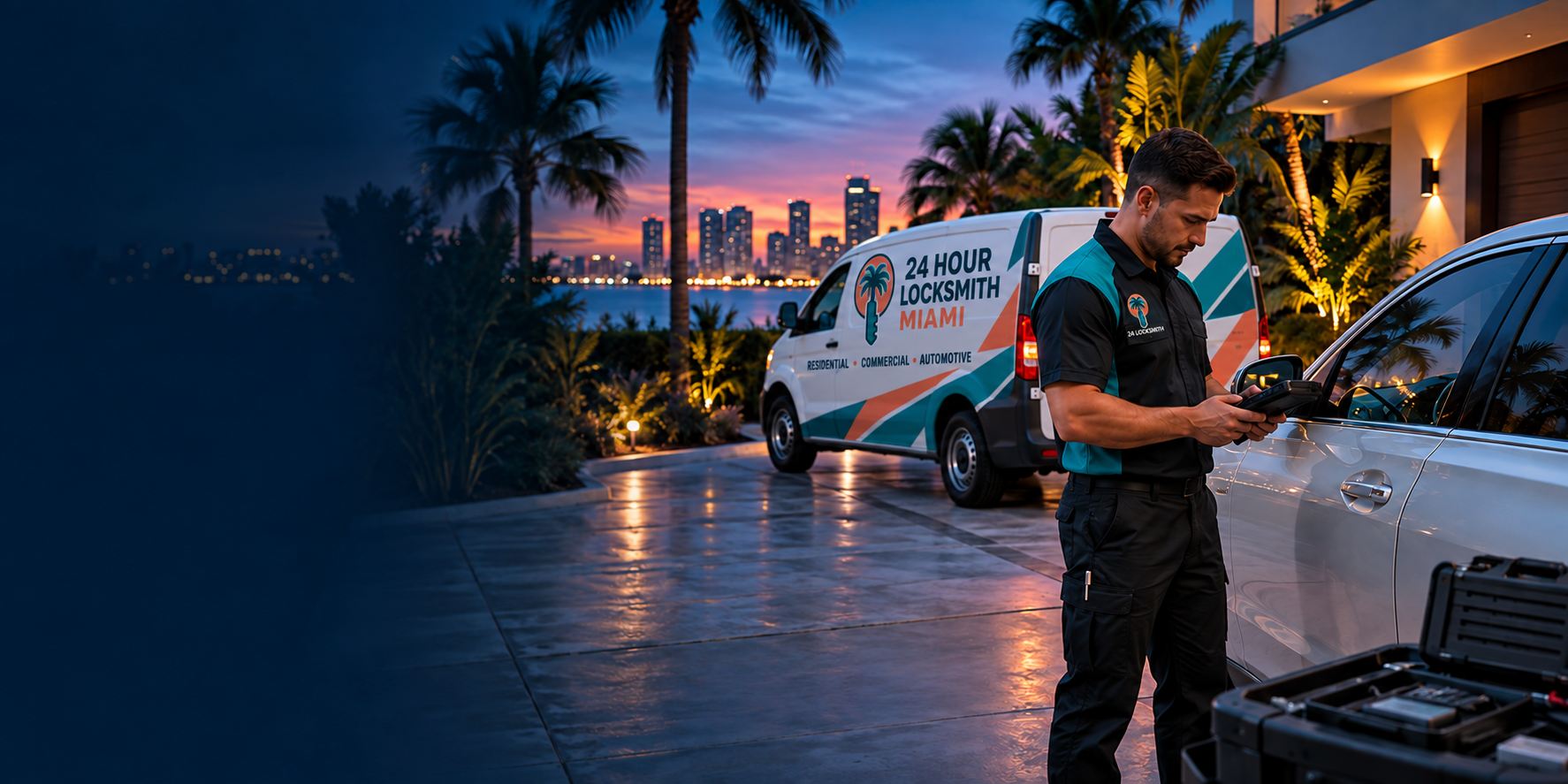
A big city with many kinds of doors
Miami Gardens covers a lot of ground. Residential streets fill much of the map, with single-family houses, duplexes and apartment buildings. Along the main roads sit strip centers with rows of small shops, restaurants, salons, offices and churches. Near the stadium, parking lots and nearby businesses see a surge of activity on event days. A locksmith working in the area moves between these settings, and the questions change with each.
For homeowners, the common thread is family life: several people with keys, children arriving from school, relatives staying over and a steady flow of visitors. For business owners, the thread is opening and closing: a manager with a ring of keys, employees who come and go and doors that are locked and unlocked many times each week. For drivers, it is the car key that is lost or locked inside at the worst moment.
Because the area is large, it helps to give clear details when you call. A cross street, a landmark, the unit number and any gate or building instructions let the dispatcher plan well. A short description of the door and the problem lets the technician bring the likely parts instead of guessing at the doorstep.
- Give a cross street or landmark along with the address.
- Describe the door, whether wood, metal or glass.
- Say whether the property is a house, apartment or shop.
- Mention who is with you and who has keys.
Family homes and everyday key habits
Most residential calls start with ordinary events. A child closes the door behind them. A parent leaves the only key at work. A teen loses a key on the bus. A house sitter returns the wrong key. These are not signs of carelessness; they are what happens in busy households. The best response is a short plan rather than blame.
A rekey is a practical reset. After a move, a lost key or the end of a relationship or tenancy, rekeying the exterior locks makes old keys useless and gives you a new set. It uses the locks you already own in many cases, and a technician can explain which can be rekeyed and which should be replaced because they are worn. Ask about setting all exterior doors to one key so family members carry a single key.
For households where children come home before adults, think about how they get in. A key around the neck can be lost or used to identify the home. A keypad lock lets you assign a passcode and change it without rekeying, though it needs reliable batteries and a solid door. A neighbor or relative who holds a spare can help, as long as that person is someone you trust.
- Decide how many keys the household really needs.
- Rekey after a move, a loss or a change in who lives there.
- Consider keypad entry where children come home first.
- Keep a spare with a trusted person, not hidden outside.
Strip centers, storefronts and neighborhood businesses
Strip centers define many commercial corridors. A single building might hold ten or more units, each with its own storefront door, back door and sometimes a shared rear alley. The landlord controls the building and the shared areas. Each tenant controls their suite, subject to the lease. Lock questions often hinge on who holds which key.
Storefront doors take wear. Glass-and-aluminum doors with narrow stiles use thin locks, and daily use loosens them. A latch that fails to catch at closing is a security problem, and a lock that sticks in the morning can delay opening. A technician can check the lock, hinge, closer and strike together, and say which is failing.
Rear doors deserve attention. They face alleys and parking areas, out of view of the street, and are where deliveries enter. A solid steel door, a good deadbolt and an adequate strike plate matter more here than on the front. If you manage a business, consider a viewer or camera so you can see who is outside before opening. Ask the landlord what hardware changes are allowed and whether the landlord keeps a copy of the key.
- Test the front door latch at every closing.
- Check the rear door for a solid deadbolt and strike plate.
- Know who holds keys, including the landlord.
- Rekey when staff with keys leave.
Stadium-area traffic and event days
Large events change traffic patterns for miles around. Roads fill, parking lots overflow and some streets close or slow to a crawl. For residents and businesses near the stadium, this affects daily life, and it can affect a locksmith visit. A technician traveling to a call may be delayed by event traffic, and the dispatcher will tell you honestly what to expect without promising an arrival window.
Event days also bring more visitors, more parked cars and sometimes more opportunistic crime in crowded areas. Residents often leave vehicles in unfamiliar lots or on side streets, and lost or locked-in keys are a familiar problem after a long game. If you lock your keys in the car in a crowded lot, tell the dispatcher exactly where you are, for example the lot name, section and nearest entrance, and stay with your vehicle in a safe, lit spot.
If you live or work near the stadium, plan ahead. Note when events are scheduled and make sure your locks are working before they begin. Business owners may want to check back doors and alleys, which can be targets when streets are busy. If you ever see a break-in in progress, move away and call 911. Locks are about prevention and repair, not confrontation.
- Check your lock status before major events.
- Give exact parking or location details if locked out of a vehicle.
- Wait in a safe, lit spot near other people.
- Call 911 for any crime in progress.
Car lockouts, lost keys and vehicle calls
Vehicle calls form a large part of the work in a city with so much driving. A car lockout with the keys inside is one of the most common. A lost key, a broken fob or an ignition that will not turn are others. Tell the dispatcher the make, model and year of the vehicle, whether it has a push-button start and what exactly has happened.
A technician will ask for proof of ownership before making or programming a key. This may be a registration, a title or a lease agreement, together with photo ID. The request protects you from someone else obtaining a key to your car, and it applies to every customer. If you cannot find your paperwork, a photo of it on a phone is often accepted, and the technician will explain what works.
If a child or pet is locked in a hot vehicle, treat it as an emergency. Call 911 first. Heat inside a closed car rises fast in South Florida, and emergency responders are equipped to act. A locksmith visit is for situations where no one is at risk.
- Have the make, model, year and key type ready.
- Be ready to show registration or title and photo ID.
- Say whether the vehicle has a push-button start.
- Call 911 first if a child or pet is locked inside.
Apartments, duplexes and shared housing
Many residents rent in duplexes, small apartment buildings and larger complexes. Locks in these settings sit in a mix of responsibility. The landlord generally controls the hardware and decides on changes, while the tenant lives with the daily experience of a lock that sticks or a door that does not close.
If you are a tenant and locked out, the technician needs proof you live there, and the landlord may need to approve. If a lock is broken, tell the landlord promptly in writing. If you worry about who still has a key from a previous tenant, ask for a rekey. Many landlords will agree because it protects them as well.
Landlords should rekey units between tenants, record who holds keys and avoid copying keys without a log. For buildings with shared entrances, mailboxes or laundry rooms, restricted keys that cannot be copied at an ordinary shop reduce uncontrolled duplication. A technician can propose a keying plan scaled to the size of the property.
- Tenants: report broken locks to the landlord in writing.
- Landlords: rekey between tenants and keep a key log.
- Use restricted keys for shared entrances.
- Agree in writing on who may change locks.
After a break-in or attempted entry
A break-in is upsetting. Before anything else, make sure everyone is safe, leave if you think someone might still be inside and call the police. Wait for them before re-entering, and do not touch or clean up evidence before they allow it. Document damage with photos for your records and your insurer.
Then call a locksmith to secure the property. Describe what was damaged: a door, a frame, a lock, a window latch. A technician can often board or secure an opening and repair or replace locks and strike plates. If keys may have been stolen, ask about rekeying so lost keys no longer work.
Also ask why the entry failed. A thin door, a short screw or a worn lock may have given way. Reinforcing the frame, using a long-screw strike plate, fitting a better deadbolt and improving lighting all add up. A technician can advise, and you choose what to do. Avoid rushing into expensive changes under stress; a calm review the next day is fine.
- Call the police first and wait before re-entering.
- Photograph damage for your records.
- Rekey if keys may have been taken.
- Reinforce the frame as well as replacing the lock.
Heat, rain and wear on door hardware
Miami-Dade weather wears down locks. Sun heats metal and dries lubricants. Summer storms drive water into keyways and latches. Humidity corrodes finishes and swells wood doors. Hurricane season adds the risk of wind-driven rain and shifting frames.
A little attention goes a long way. Test locks once in a while. If a key feels gritty, avoid heavy oil, which collects dust. Check that the door closes without a push, and that the bolt enters the frame fully. Tighten loose screws on handles and strike plates. Replace worn keys before they break off in a lock.
Before a storm, know where your keys are and how you will lock up. After a storm, check each door for changes in fit. If anything seems off, call and describe it. Do not force a stuck door. If there is flooding, a gas smell or downed lines, step away and call 911.
- Test locks regularly and note changes in feel.
- Avoid heavy oil sprays in keyways.
- Tighten loose handle and strike screws.
- Check doors after storms.
How a Miami Gardens service call works
Call and describe the location, the door or vehicle and what has happened. The dispatcher asks who you are, whether anyone is inside and whether you can authorize the work. A quote is given by phone. Complicated jobs need an on-site look before a firm number is possible. A service call charge applies and is explained before dispatch.
On arrival, the technician confirms identity, examines the lock and explains what they find. They will offer options and wait for your agreement before beginning. If the job changes from the phone quote, they explain why and ask first.
When the work is finished, test every key, confirm the lock works smoothly and keep any record you are given. Ask about care and about spares. When you are ready, call and describe your situation so the technician can come prepared.
- Location, door or vehicle, and the problem.
- Photo ID and proof of ownership or residence.
- Details on who is inside or at risk.
- Time to test every key afterward.
Churches, community spaces and shared keys
Churches, community halls, youth programs and neighborhood organizations are a visible part of life here, and they share a lock challenge: many volunteers need access, yet keys are rarely tracked. A church may have a front door, a side entrance, a kitchen, an office, a storage closet and a fellowship hall, with keys held by a dozen people across several years. When someone moves away or leaves a role, the key often goes with them.
The practical fix is a short key plan. Decide which doors each role needs. A cleaner needs the main entrance and supply room, a treasurer needs the office and a youth leader needs the hall. Key those areas so one key does not open everything, and keep a written list of holders. When a volunteer leaves, collect the key and record it. If a key cannot be recovered, rekey that lock rather than hope.
Doors that serve as exits must open easily from inside, and any change should respect that. Ask a technician about hardware that stays secure from outside while letting people leave quickly in an emergency. Board members or the person authorized to act for the organization should approve work, and the technician may ask for confirmation of that role before starting. Keeping a simple record of what was changed helps the next volunteer who takes over.
- List every door and who needs it.
- Key areas separately where practical.
- Keep a written list of key holders and collect keys when roles change.
- Make sure exit doors open easily from inside.
Questions people ask
Do event days affect how a locksmith visit works?
They can. Heavy traffic near the stadium slows travel, and the dispatcher will tell you honestly what to expect without promising an arrival window. Give an exact location and landmarks, especially if you are in a crowded lot. Wait in a safe, lit area near other people.
What proof do I need for a car key?
Expect to show photo ID plus a registration, title or lease agreement showing the vehicle is yours or that you can authorize the work. A photo of the paperwork on your phone is often accepted. The check protects owners from someone else obtaining a key to their car.
Should I rekey after losing a house key?
Usually yes, especially if the key had an address attached or was lost in a public place. Rekeying makes the lost key useless without replacing your locks in many cases. A technician can check whether your locks can be rekeyed and quote the work by phone.
Can you help a small business in a strip center?
Yes. Storefront locks, back doors and key control are common calls. Describe the door type and the problem. Bring a lease or business document if asked, because the technician must confirm you can authorize work on the space. Landlord-controlled doors may need the landlord's approval.
What if a child or pet is locked in a hot car?
Treat it as an emergency and call 911 first. Heat inside a closed car rises quickly in South Florida, and emergency responders are equipped to act at once. Call a locksmith only if no one is at risk or after responders have handled the emergency.
How is pricing handled?
Quotes are given by phone only. Complicated jobs need an on-site look before a firm number is possible. A service call charge applies and is explained before dispatch. If the job changes once the technician sees the lock, they explain why and wait for your agreement.
Describe the situation by phone and we will tell you what the job involves. Quotes are given by phone. Jobs that cannot be quoted without seeing them need a technician on site, and the service call charge is explained on the phone before anyone is dispatched.
(786) 539-3980Related pages
Written by Claude (AI) (AI) for 24 Hour Locksmith Miami.