
The question behind the question
A locksmith is, in a practical sense, someone who can get past a barrier that was put there to keep people out. That skill is useful when you are the rightful owner and dangerous when you are not. The technician cannot see inside the building or the vehicle, cannot read minds, and has only your word and your documents to go on. Authorization is how a professional answers the quiet question every call raises: is this person entitled to have this lock opened or changed?
Asking is not an accusation. A technician asks everyone, including long-time residents and people who are plainly upset. The same question protects a homeowner whose door could otherwise be opened by an ex-partner, a former roommate or a stranger with a convincing story. If a technician skipped the check, anyone willing to lie could use that company to enter your home or take your car.
Think of it the way you think about a bank asking for identification before releasing funds. The inconvenience is small compared with the harm that an unchecked request could cause. A reputable provider treats the check as a normal part of the job, explains it plainly and moves on once it is complete.
What a technician is trying to confirm
There are usually two things to establish. The first is who you are, which is what a government-issued photo identification shows. The second is your connection to the property or vehicle, which is what a lease, a utility bill, a registration or similar paperwork can show. Together they tell the technician that the person standing here is the person with a right to be here.
The right proof depends on what is being opened. For a home, proof of residence in your name or a lease that lists you generally carries weight. For a vehicle, registration or a title in your name is the usual evidence. For a business, the technician may need a person with authority, such as an owner, manager or property representative, rather than just an employee who happens to be present.
Our guide on what ID and proof to have ready lists the common documents in more detail. What matters here is the principle: the more the work could affect others, such as changing who can enter, the more careful the technician should be.
- Who you are: a photo identification that matches your name.
- Your connection: paperwork that ties you to the home, business or vehicle.
- Your authority: for shared or commercial property, proof you may decide.
- The match: details on the paperwork that agree with where the technician is standing.
How authorization protects you from people you know
Most people imagine a stranger when they picture an unauthorized request, but many real conflicts involve people who once had a legitimate reason to be there. A former partner who still has a key and an account at the utility company can sound very convincing on the phone. A departed roommate may still think of the apartment as theirs. A relative in a dispute over a property may want the locks changed before the other side can react.
Because of this, a careful technician looks at the document trail, not just the story. If two people both claim the right to a door, the technician is not the judge. The honest response is to ask both sides to resolve the question, perhaps through the property owner, a manager or a legal process, rather than taking a side by opening or changing the lock. That can feel unhelpful in the moment, but it keeps the technician from becoming part of a conflict.
If you are in a situation like this, such as changing locks after a separation, be prepared to show why you hold authority. Our page on who decides between an owner and a tenant explains common patterns and when a written approval helps. Being ready with documents speeds things up and reduces friction on the call.
Authorization for vehicles
Vehicle work has its own concerns because cars move, can be sold or stolen, and carry valuable keys and electronics. A person who can get a new key made for a vehicle can drive it away. Technicians therefore ask for proof that the vehicle is yours before making a key, programming a fob or opening a locked car, unless an emergency changes the picture.
Typical proof includes a registration or title in your name that matches your identification and the vehicle identification number visible on the dashboard or door jamb. A technician may also compare the details with the car in front of them. If you recently bought the car and have not yet received the title, a bill of sale along with other documents can sometimes bridge the gap, though it is worth asking by phone before the visit.
A car with a child or pet locked inside is handled differently, and the first step in a true emergency is to call 911. Responders can act at once, and a locksmith can follow if needed. For everything else, the check is part of the job, and a technician who asks is protecting the car's owner from theft. See our guide on vehicle ownership and key requests for more.
Commercial and shared property
Business locks raise a different question, since the person on site may not be the one who controls the property. An employee who is locked out is not necessarily authorized to approve a rekey of the whole suite. A tenant may be able to change a suite door but not the building's main entrance. An association member may have no authority over common doors. A technician needs a person who can legitimately say yes.
That is why a call about a commercial door often includes a question about who owns or manages the space, and why the technician may ask for a lease, a management letter or a call back from the owner. It is not a delay tactic. It protects the business from a locksmith being used to enter by someone who has no right, and it protects employees from being asked to take responsibility they do not hold.
Keep records of who may authorize lock work and where the key records are stored. Our guide on commercial authorization and key records explains how to organize that. Preparing ahead means that when a real lockout happens at an inconvenient moment, the right person can approve it quickly.
- Know who in your organization may approve lock work.
- Keep a lease or management letter where it can be found.
- Keep an up-to-date list of key holders.
- Make sure the authorizing person can be reached by phone.
What happens if you cannot provide proof
Sometimes the paperwork is on the other side of the locked door. That is a very common predicament, and technicians know it. The check does not always require a physical document in your hand. A technician may accept other reasonable ways to connect you to the property, such as identification showing the address, a lease on your phone, a message from a property manager, or a neighbor or building representative who can vouch for you in person.
Every case is judged on its own facts, and the technician has the final say on whether the work can proceed. If the evidence is thin, a technician may decline rather than risk opening a door for the wrong person. Do not be offended. A professional who turns away an unverified request is the same professional who would refuse to let a stranger into your home.
If you cannot show proof, say so honestly and describe what you do have. Do not invent a story or alter a document, because a fabricated claim can create legal trouble for you and will end the call. Ask what alternatives are possible, such as having the property manager confirm by phone, and be patient while they are arranged.
Red flags when a company does not ask
A provider that never mentions identification, never asks about the address and never wonders whether you are the occupant should raise your concern, not ease it. Skipping the check is a sign of a company that wants volume more than responsibility. If they will open any door for anyone, they will also open yours for someone else.
Other warning signs often travel with the missing check: vague company names, no clear local identity, a price that changes on arrival, and a technician who arrives in an unmarked vehicle without identification. Our guides on how to verify a locksmith and on scam warning signs lay out what to look for before and during the visit.
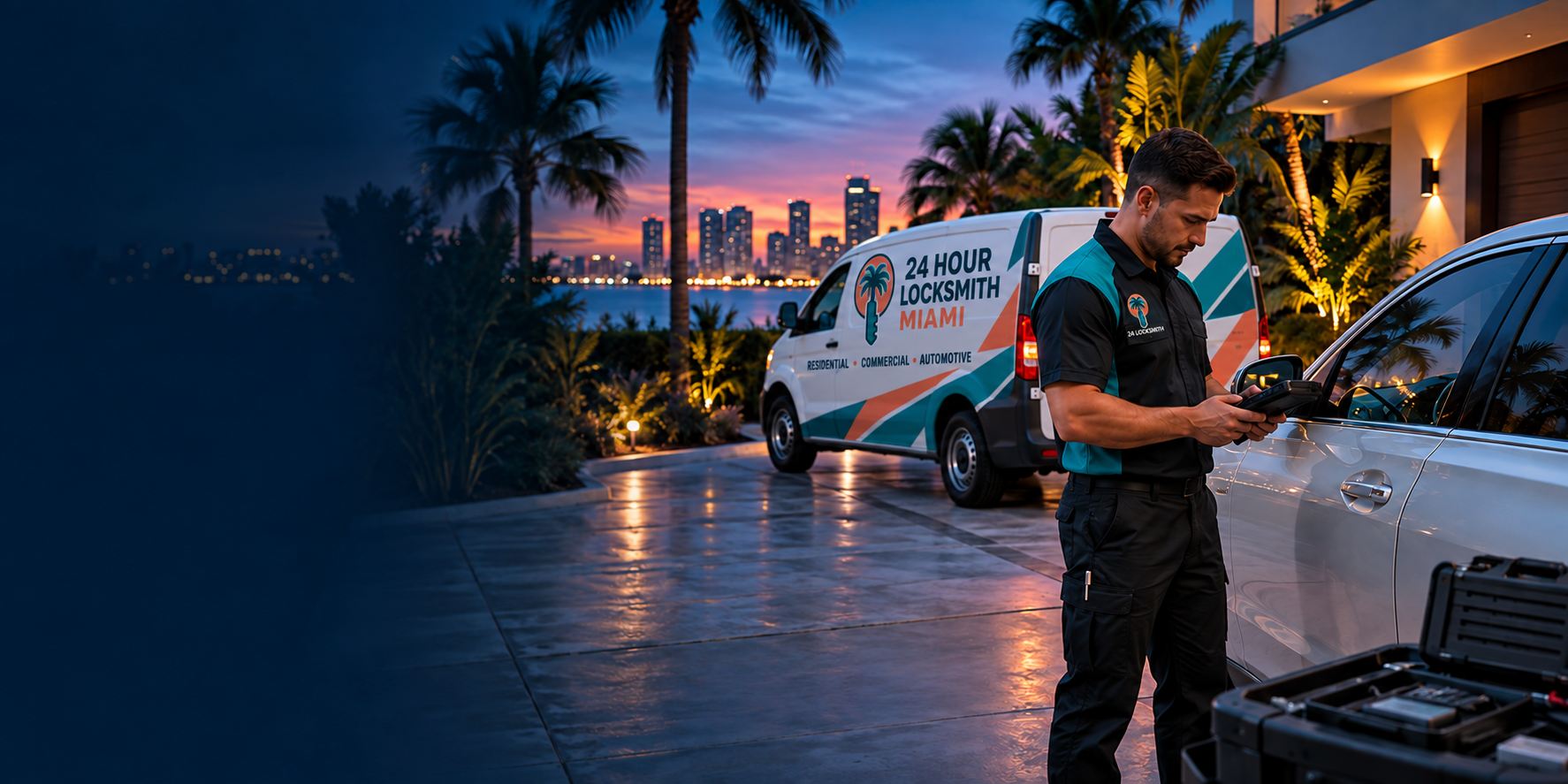
A trustworthy technician will also identify themselves, explain what they are about to do and tell you what they need from you. You should ask for their identification, to ask which company they represent and to verify credentials as required in your area. A professional welcomes those questions, because the same suspicion that makes you careful is the one that makes the check meaningful.
How to make the check quick
The easiest way to shorten the process is to prepare before you need it. Keep a photo of your identification and of one document that shows your address on your phone, where it will still be available if you are locked out. For a vehicle, keep a photo of the registration. For a business, keep a lease or authority letter in cloud storage or with a trusted colleague.
When you call, say plainly who you are, where you are and what the situation is. Mention whether you own the property, rent it, or manage it for someone else. Tell the dispatcher what proof you can show. This lets them tell you at once whether you are likely to be fine or whether you should arrange more evidence before the technician arrives.
Remember that quotes are given by phone, and complicated jobs may need an on-site visit. There is a service call charge, explained before anyone is dispatched. The authorization check happens in addition to those steps. Treat it as a normal part of a safe job, and when you are ready, call and describe your situation so the dispatcher can tell you what to have on hand.
Three short scenarios
Consider a renter who has lived in an apartment for a while and locks the keys inside while taking out the trash. The person has a photo identification in a pocket and a lease saved on a phone. The technician checks the identification, looks at the lease, confirms the unit number matches and proceeds. The whole check takes a minute or two, and the renter is back inside.
Now consider a caller who says they are locked out of a house but cannot show any link to it, becomes vague about the address, and gets irritated when asked about it. A careful technician will pause. The caller may be telling the truth and simply be flustered, or may not belong there. The technician cannot tell which, so the safe answer is to ask for something that connects the caller to the home, such as a message from the landlord or a neighbor who can confirm.
Finally, consider a manager of a small office who calls after hours because an employee lost the only key to a storage room. The manager is authorized to approve the work, can show a lease or a letter, and can describe which door is involved. The technician checks and proceeds. In each case the process is the same: ask, compare, confirm, then work. People who treat the check as routine finish quickly, and people who understand it tend to appreciate it afterward.
Questions people ask
Why does the locksmith need to see my ID if I am obviously locked out?
The technician cannot see inside the home or confirm who lives there, and a person who looks stranded could be anyone. Checking identification and proof of residence is the standard way to make sure the person asking is entitled to enter. It protects residents from unauthorized access, including by people they know.
What if my ID has an old address?
That is common. Pair the identification with another document that shows your current connection to the property, such as a lease, a utility bill or a letter from the property manager. Explain the situation on the phone beforehand so the dispatcher can tell you what will be accepted.
Can a technician refuse to open my door?
Yes. If the technician cannot reasonably confirm that you are entitled to the access, they may decline. This is a protective measure. If proof is on the other side of the door, ask what alternatives exist, such as a confirmation from a landlord, manager or other trusted person.
Do the same rules apply to cars?
Yes. Technicians typically ask for photo identification and proof of ownership, such as a registration or title, before opening a car or making a key. A key can be used to drive a vehicle away, so careful checks protect the vehicle's owner. A child or pet locked inside is an emergency: call 911 first.
Is it a bad sign if the company never asks for ID?
It is a warning sign. A provider that never checks who you are is willing to open any door for anyone, which means your door could be opened for someone else. Combine that with other red flags, such as vague company details or changing prices, and consider calling a different provider.
Who can authorize work at a business?
Typically the owner, a manager or a property representative with authority over that space. An employee who is simply present may not have that authority. Have the right person reachable by phone and keep a lease or authority letter on hand so the call goes smoothly.
Describe the situation by phone and we will tell you what the job involves. Quotes are given by phone. Jobs that cannot be quoted without seeing them need a technician on site, and the service call charge is explained on the phone before anyone is dispatched.
(786) 539-3980Related pages
Written by Claude (AI) (AI) for 24 Hour Locksmith Miami.