
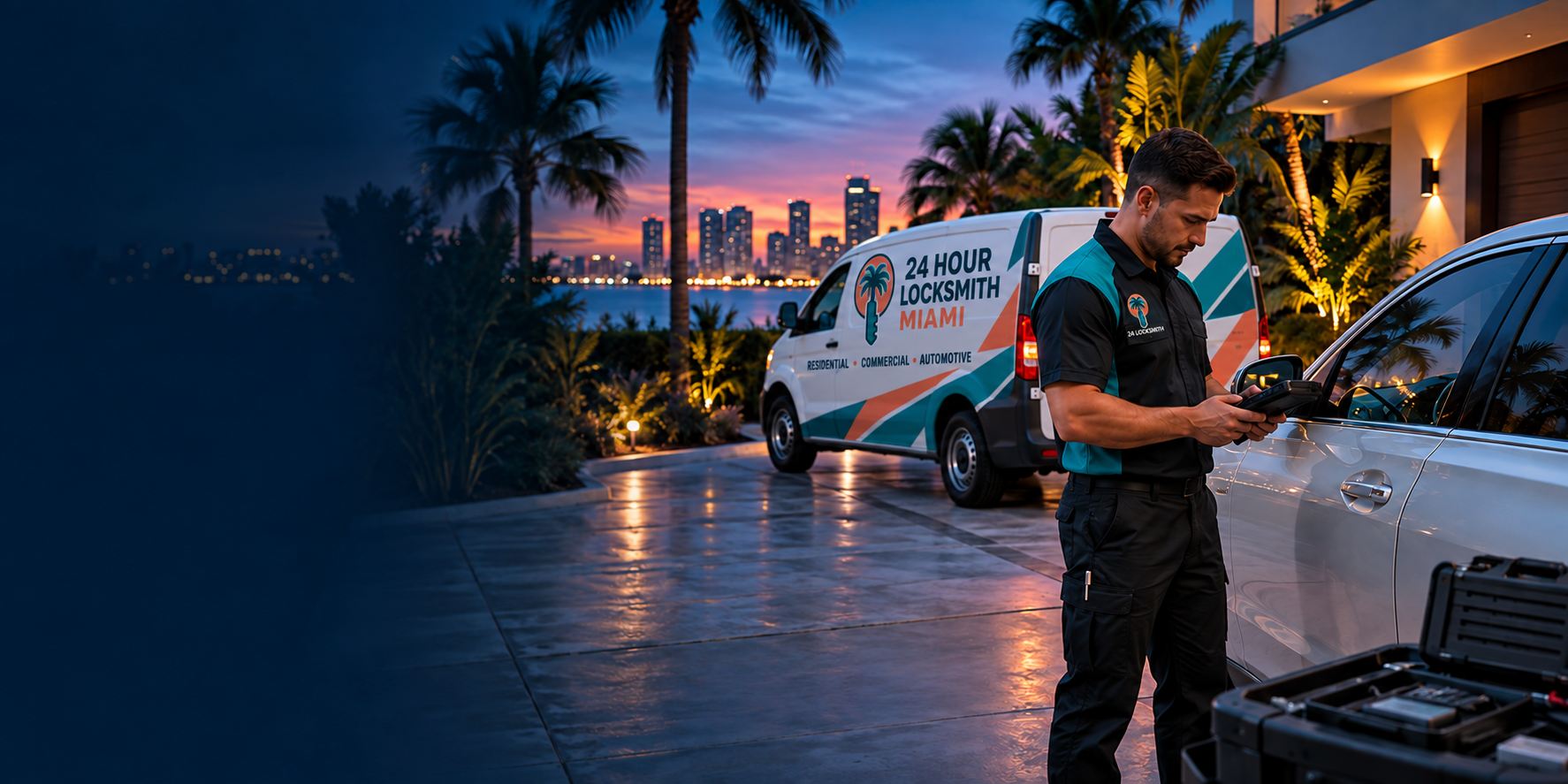
Why proof of ownership comes before a key is cut or programmed
Car theft often starts with a key. A thief who can obtain a working key has no need to break a window or damage an ignition, and the car can be driven away without drawing attention. For that reason, a reputable automotive locksmith treats a key request as a security matter. Before cutting a key, or programming a transponder or smart fob to a vehicle, the technician wants to know that the person asking is the owner or someone the owner has authorized.
This can feel inconvenient when you are standing next to your own car at night with no key. It helps to remember that the same check protects you. If your car is parked at the airport or outside a restaurant and someone else tried to get a key made for it, you would want the technician to ask hard questions. The checks are routine, quick when you are prepared, and part of how legitimate shops separate themselves from careless ones.
The process is not about suspicion. Most people asking for a replacement key are exactly who they say they are. The technician simply needs enough evidence to be comfortable, and the evidence is usually two or three ordinary documents that most drivers already carry or can find on a phone.
The documents that usually matter
Two kinds of proof work together. One shows who you are. The other shows the connection between you and the vehicle. Having both ready makes the visit go smoothly.
For identity, a valid government photo ID is the standard. A driver license, a state ID card or a passport all work. The name should match the name on the vehicle documents or you should be able to explain the link, for example a married name change or a company vehicle.
- Current registration. This is the most common ownership document in daily use. It shows the owner's name and the vehicle identification number, and it is often kept in the glove box. If your keys and glove box are both locked inside the car, a photo of it on your phone or a copy at home usually works.
- Title or title record. The title is the stronger proof of ownership. If the car is paid off, you may have the paper title at home or an electronic record. If it is financed, the lender may hold the title instead.
- Insurance card or policy page. It does not prove ownership by itself, but it supports the registration by showing the same vehicle and the same name.
- Bill of sale. For a recent purchase, especially a private sale, a bill of sale together with ID can show you bought the car before the registration is processed.
- Vehicle identification number. The technician needs the VIN to look up the correct key blank and programming data. It can be read through the windshield at the base of the dash on most cars, and it appears on registration and insurance papers.
When the car is financed: what the lienholder means
If you are still paying off the car, the bank or finance company usually appears on the title as a lienholder. That does not stop you from getting a replacement key. In ordinary use you are the registered owner and the lienholder holds a financial interest until the loan is paid. Registration in your name is generally enough to support a key request.
What it can change is where the title paperwork lives. A technician may ask for the registration and your ID rather than the title, since the lender holds the title. That is normal and expected. You do not need to call your lender for a routine spare or replacement key.
There are a few situations where a lienholder matters more. If the loan is in default and the lender has repossessed or is in the process of repossessing the car, the right to access the vehicle may have shifted. In that case, a locksmith will not make keys unless the paperwork supports it. Likewise, if you are trying to get a key for a car you do not own on paper, such as a vehicle still in a former partner's name, the lender and the registration both point to someone else.
If you are unsure how your own financing is recorded, look at the registration. It lists the registered owner, and in many cases it shows the lienholder too. Having that page ready answers most of the questions a technician is likely to ask.
Leased vehicles and company cars
With a leased car, the leasing company owns the vehicle, and you are the registered lessee. A key request is generally still possible, but the paperwork is different. Bring your lease agreement or a registration that names you as lessee, along with photo ID. Some leasing companies have rules about aftermarket keys, and a few require that replacement keys come from the dealer. A technician can tell you whether an independent key is likely to be acceptable and whether you should check your lease terms first.
Company vehicles add another layer. A business car is registered to a company, so the person requesting the key should be able to show they act for that company. A letter on company letterhead, a registration in the business name and the requester's photo ID are the usual combination. Fleet managers who handle many vehicles often keep a standing authorization letter on file, which saves time on every call.
If you drive a company car and have lost the only key, call your employer before the locksmith. They may already have a spare, a preferred vendor or specific rules about who may order keys. Calling first can save a trip and keep you inside company policy. For fleets, the page on fleet key management covers how businesses keep track of many keys at once.
Borrowed cars, family cars and cars in someone else's name
Plenty of people drive a car that is not registered to them: a parent's car, a spouse's car, a car owned by a relative who lives abroad. None of that is unusual, but it does mean the registration will not match your ID. The solution is to bring the owner into the process.
The cleanest option is for the registered owner to be present with their ID. If that is not possible, the owner can phone the locksmith and confirm the request, or provide a written note naming you and the vehicle. A technician can then compare the note, the registration and your ID. Be aware that the more distant the connection, the more the technician will ask, and a note that looks hastily made will not carry as much weight as a call from the owner.
Spouses and household members are the simplest case when the registration lists both names or when the second person can show the same address and the owner agrees. Adult children driving a parent's car are usually handled by a quick call from the parent. Friends lending cars to friends, on the other hand, may find the process slower. The technician is not being difficult, only careful.
If a car was bought from a private seller and the title has not yet been transferred, bring the bill of sale and the seller's signed title if you have it. Without any paperwork linking you to the car, a locksmith may decline to make a key until you can show something.
What a technician does to confirm the vehicle matches the paperwork
Documents are one half of the check. The other half is the car itself. A technician will usually compare the VIN on the registration with the VIN on the dashboard or door jamb. They may also look at the license plate, the make and model, and the general condition of the car. This is not an accusation. It is a way to confirm that the paper in your hand belongs to the vehicle in the parking space.
That same step ensures the technician orders the right key. Many modern keys are tied to a specific vehicle by VIN or by a security system that expects certain data. Using the wrong blank or the wrong programming sequence wastes time and can cause further problems. A correct VIN lookup avoids that.
Some vehicles, particularly newer European models and some trucks, require the VIN to be submitted to a secure database to obtain key data. This is another reason to have registration or insurance information ready. The process often depends on the correct details being available at the start. If you want to see how key types differ, the guide to transponder key programming explains what is being matched to the car.
If you cannot reach your papers: practical workarounds
The classic problem is that the registration is in the glove box and the glove box is in the locked car. A few options help. Many people store a photo of the registration and insurance card on their phone, and a clear photo is often acceptable when it matches the ID. A state-issued digital registration or an insurer's app can serve the same purpose. A neighbor, family member or office may hold a copy.
If the car is locked, a technician can often help you get back into it first, and the registration can then be produced from the glove box. A lockout service and a key service are separate jobs, and the technician will explain which is which. For more on that, see car lockout with keys inside.
If you truly have no papers at all, do not give up. The registered owner may be reachable. The motor vehicle agency can issue a duplicate registration, and an insurance company can send a policy page quickly. Waiting a short while for the right documents is usually better than trying to push a technician to cut corners, because a shop that asks for nothing is a shop to be careful with.
Warning signs on the other side of the counter
Your own preparation is half the picture. The other half is noticing whether the person you are dealing with is handling the job properly. A professional who asks no questions at all, makes keys for any vehicle on request and does not seem to care about the paperwork is not protecting you or other drivers.
Watch for a shop that will make a key without seeing any ID, that waves away the request for registration, or that pushes you to hurry. Also be careful with anyone who offers to bypass the car's security system in a way that does not require the proper key data. Legitimate key programming uses the car's own procedures and the correct data for the vehicle.
The reverse is also true. If a technician asks for ID and registration, compares VINs and explains the steps, that is a sign you have a careful person. For wider tips on judging a company before it arrives, read how to verify a locksmith is legitimate.
Preparing before you call and what the call covers
A little preparation saves time. Before you call, gather what you can: your photo ID, the registration or a photo of it, the VIN, the make, model and year, the number of working keys you still have, and whether the key is a plain metal key, a chipped key, a push-button fob or a smart key. Note where the car is and whether you can get inside it.
When you phone, you will be asked these details, along with your location and whether the car is private or company owned. Quotes are given by phone based on the vehicle and the key type. Some vehicles can be quoted in the conversation. Jobs that are less common or more complicated may need a look at the car first, and there is a service call charge for sending a technician, which is explained on the phone before dispatch.
At the visit, show your ID and papers, let the technician check the VIN, and ask what will happen next. After the work, test every function of the new key, including the door locks, the ignition and any remote buttons. Keep the receipt with your registration. If you want a clear picture of the steps, the guide on what to expect during key programming walks through a typical visit.
If you are not sure what documents apply to your situation, call and describe it. A short conversation will tell you what to bring before anyone is sent out.
Questions people ask
Do I need the title to get a replacement car key?
Usually not. Current registration and a photo ID are the most common documents used for a key request, and they are easier to find than a title. If the car is financed, the lender often holds the title, which is normal. A technician may ask for the title in less usual situations, such as a recent private sale with registration still pending.
Can I get a key for a car that is financed?
Yes, in ordinary circumstances. You are the registered owner while the lender holds a financial interest. Bring your photo ID and registration, and the process is the same as for a paid-off car. Problems only arise if the loan is in default or the vehicle has been repossessed, where the paperwork would point elsewhere.
What if the car is registered to a family member?
Ask the registered owner to be present, or to call the locksmith and confirm the request. A written note naming you and the vehicle, plus the registration and your ID, can also help. The technician will weigh how well the paperwork connects you to the owner, so being able to reach the owner by phone is the simplest route.
Is a photo of my registration acceptable?
Often yes, if the photo is clear, shows the owner name and VIN, and matches your ID. A digital registration or an insurer app can serve the same purpose. The technician also checks the VIN on the car itself, so the photo only needs to support what the vehicle shows.
Will a locksmith make a key without any paperwork?
A careful one will not. Making a vehicle key without any proof of ownership or authorization creates a theft risk. If you cannot reach your papers, you can usually get a duplicate registration, ask the owner to confirm by phone or have the car opened first so the papers can be retrieved.
Does a leased car need different documents?
Bring your lease agreement or a registration naming you as lessee, along with photo ID. Some leasing companies have rules about aftermarket keys, so it is wise to check your lease terms. A technician can tell you whether an independent key is likely to be acceptable for your vehicle.
Describe the situation by phone and we will tell you what the job involves. Quotes are given by phone. Jobs that cannot be quoted without seeing them need a technician on site, and the service call charge is explained on the phone before anyone is dispatched.
(786) 539-3980Related pages
Written by Claude (AI) (AI) for 24 Hour Locksmith Miami.