
Why car keys need programming at all
In an older car, a key was just a cut piece of metal. If it fit the ignition and turned, the car started. Since the late 1990s, most vehicles use an immobilizer system. A small chip in the key, or a coded signal from a smart fob, must be recognized by the car's computer before the engine will run. Cutting a matching blade is not enough on its own, because the car also expects the right electronic identity.
Programming is the step that teaches the car to accept a new key. Depending on the vehicle, this may mean pairing a transponder chip, registering a remote, enrolling a proximity fob, or generating new key data from the manufacturer's system. Some vehicles allow a spare to be added with a simple on-board procedure when you already have a working key. Others require dedicated equipment connected to the car's diagnostic port.
This is why a car key visit takes more steps than a house key. It is also why a careful technician asks about the make, model, year and number of existing keys before they arrive. You can read more about the technology in transponder key programming and smart key fob replacement.
The first phone call and what the dispatcher needs
Everything starts with accurate information. Be ready to give the make, model and year of the vehicle, its color if asked, and where it is parked. Say whether you have any working keys left, because adding a spare to a car with a working key is often simpler than recovering from all keys lost. Describe the key you have: a plain metal key, a key with a plastic head, a flip key, a push-button remote or a smart key you carry in a pocket.
Have the vehicle identification number if you can. It is printed at the base of the windshield on most cars and on the registration and insurance papers. The VIN helps the technician identify the correct key blank and system. Without it, some vehicles are harder to match.
Quotes are given by phone. For many vehicles a price can be given in the call once the dispatcher knows the model and key type. Some vehicles, particularly rarer or more complicated ones, may need a closer look first. There is a service call charge for dispatching a technician, and it is explained on the phone before dispatch. Do not expect an arrival time promised at every hour and place, and ask what is realistic for your location.
What you will need to show
Because a key can start a car, you will be asked to show that the vehicle is yours or that you are authorized to have a key. Plan to bring a government photo ID and a registration or title record that matches the vehicle. A clear photo on your phone usually works if the car is locked and the papers are inside. The page on vehicle ownership and key requests covers the paperwork in depth, including financed and leased cars.
The technician will also compare the VIN on the car with the VIN on your documents. This is routine and quick. Be patient with it, because the same check that slows you down by a minute is the check that stops someone else from getting a key to your car.
If you cannot produce papers on the spot, tell the technician. There may be a workable route, such as the registered owner confirming by phone. Do not be tempted to find a shop that asks for nothing, since that is a shop that is not looking after anyone's car.
Arrival: identification and the first look at the car
A professional should state the company name, show identification if asked and confirm the details of the job. Take a moment to check that they match what you were told on the phone. The technician then looks at the vehicle, confirms the VIN, checks the ignition and any existing keys, and identifies the exact key type. This is the point at which surprises sometimes appear: a vehicle turns out to have a different key system than expected, or the key you described is a variant that needs a different part.
If something changes, ask for a plain explanation and, where the plan or the quote changes, agree on it before the work goes further. A fair technician will tell you what they found, what it means and what the options are. They should not start work that changes the price without telling you first.
The technician will also ask about your goals. Do you need only one working key, or a spare as well? Do you want remote buttons as well as the ignition function? Is the vehicle used by several drivers? Having a clear idea of the number of keys you want saves a second trip.
Cutting and preparing the key
If your key has a metal blade, it must be cut to match the locks of the car. When you still have a working key, the technician can copy its pattern. When all keys are lost, the cut is generated from the vehicle's key data, which may be obtained by looking up the VIN in a manufacturer database, reading the lock or decoding it. Equipment varies, but the result is the same: a blade that turns the door and ignition.
Many keys now have a laser-cut or high-security profile, with a groove milled down the side instead of teeth on the edge. These need a different type of cutting machine, and the technician may do the cut in a van or may bring the key from a shop. Either is fine as long as the key you receive works.
Smart keys and proximity fobs often have an emergency blade hidden inside the case. The blade opens the door if the battery is dead. It does not start the car, since starting depends on the electronic pairing, but it is still worth testing. A good technician checks that the hidden blade turns the door lock.
The programming step
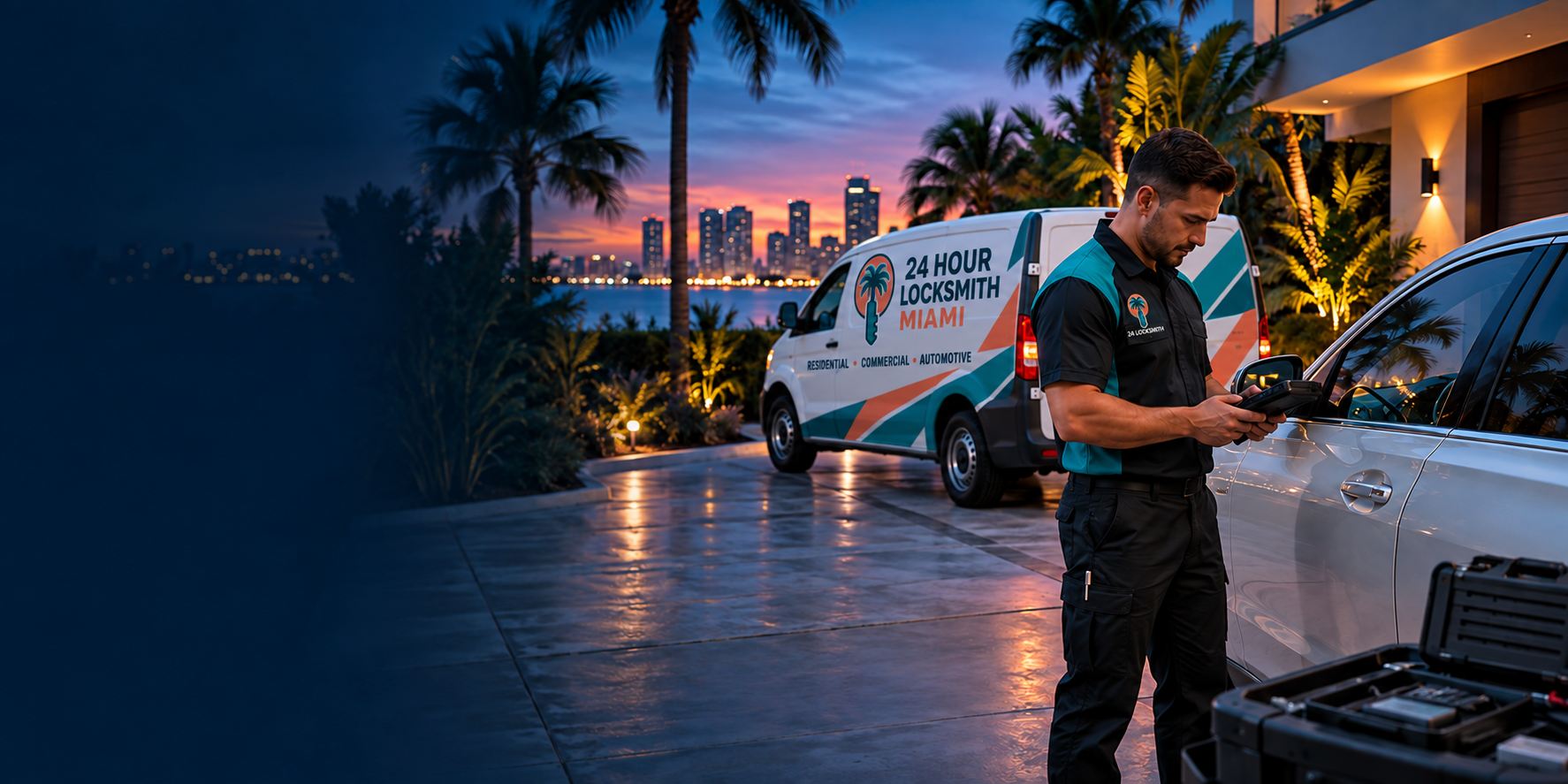
This is the part most people do not see. The technician connects equipment to the car's diagnostic port, usually located under the dashboard near the driver's knees. The tool communicates with the car's security system and either requests the manufacturer's authorization to add a key or follows a procedure built into the car. Depending on the vehicle, this can take a few minutes or considerably longer.
During programming, you may be asked to sit in the car, turn the ignition on and off in a certain order, or press buttons on the remote. Do as the technician asks, and do not interrupt the process by starting the car unexpectedly or opening doors at the wrong moment. Some vehicles are sensitive to battery voltage, so the technician may connect a power supply to keep the car's battery steady.
Some systems wipe and rewrite the list of approved keys. In that case, every key you want to keep must be present, or it will no longer work. Tell the technician at the start about all keys you intend to use. If you hold a spare somewhere else, bring it. A key left out of the process may need to be programmed in a second visit. The idea of control over which keys work is also behind the guide on duplication versus cloning.
Testing every function before you say yes
Once programming is done, test everything while the technician is still there. The list below covers most of what a modern key does. Go through it item by item, and do not rush.
A complete test avoids a second visit and gives you confidence that the key is truly working, not just working for a minute.
- Unlock and lock the driver door with the blade or the remote.
- Press every remote button: lock, unlock, trunk or tailgate, and panic if it exists.
- Insert the key, turn it to the run position and confirm the dashboard lights as normal.
- Start the engine, let it run and turn it off again. Repeat once.
- For a smart key, test starting with the fob inside the car and confirm the car refuses to start with the fob outside.
- Test the emergency blade in the door, if the key has one.
- Test every key you received, including spares, one after the other.
What can go wrong, and how a good technician handles it
Programming is reliable, but it is not always smooth. A battery in the remote may be weak, a key may fail to pair on the first attempt, or the vehicle may respond in an unexpected way. A skilled technician has a plan for each. They may try a different procedure, replace a faulty part or explain that a particular key type is incompatible with your car.
Be wary of one shortcut. Some keys sold online are low quality or locked to another vehicle, and they cannot be used. If you buy a key or fob yourself, tell the technician before the visit, since a used or unmatched part may not be programmable. A technician cannot promise that a part bought elsewhere will work, and the same is true for reused remotes.
If your car is a rare or very new model, the technician may tell you it needs a visit to the dealer or a tool they do not carry. That is honest, and it can save you money and time. For a comparison of the two routes, read dealer versus locksmith car keys.
After the visit: receipts, spares and keeping control
Ask for a receipt that lists the date, the vehicle, the keys made and the work done. Keep it with the registration. If your car has a security system that remembers keys, ask whether any old keys were erased, since a lost key that is still on the car's list could still start it. If a key was stolen, make sure it was removed.
Treat the new key with care. Do not leave a spare in the car. Do not keep a smart key next to a front window at home where a signal could be extended. Keep a spare in a safe place at home, not in a wallet or purse that might be lost together with the main key. The guide on fob relay theft awareness explains the risk in more detail.
Finally, think about the next key. If you only have one key left, get a spare before the last one fails. It is far easier and more affordable to add a key while you have a working one than to start from nothing. When you are ready, call, describe the car and the key, and the quote conversation begins with a few clear questions.
Questions people ask
How long does car key programming take?
It varies with the vehicle and the situation. Adding a spare when you already have a working key is often shorter than recovering from all keys lost. Some makes need extra authorization steps that take longer. Ask the technician for a realistic estimate when you call, and plan for the visit to include testing, not only the programming itself.
Do I need to bring the car anywhere, or can the work be done where it is parked?
Many key services are done at the vehicle by a technician with mobile equipment. Some vehicles or unusual keys require work at a shop or a dealer. When you call, the dispatcher can tell you whether your car can be done on location, and what to expect if it cannot.
What if I have lost every key to the car?
It can be done, and many technicians handle it routinely, but it usually takes more steps than adding a spare. The key blade is generated from vehicle data, and the new key is programmed through the diagnostic port. You will need to show ownership proof, and the old keys may be erased from the system for safety.
Why does the technician ask for my registration and ID?
A car key is a security item, and making one for the wrong person could help a theft. Showing ID and registration lets the technician confirm you are entitled to the key. It is a routine step that protects you and every other driver, and shops that skip it are best avoided.
Will my old keys still work after programming?
It depends on the system. Some vehicles keep all enrolled keys, while others erase and rewrite the list, so every key you want must be present. If a key was lost or stolen, ask for it to be removed from the car's list. Test every key you keep before the technician leaves.
Can I program a key I bought online?
Sometimes, but not always. Many online keys are low quality, locked to another vehicle or the wrong frequency, and a technician cannot promise they will work. If you already own a key or fob, tell the technician in advance so they can check compatibility before arriving.
Describe the situation by phone and we will tell you what the job involves. Quotes are given by phone. Jobs that cannot be quoted without seeing them need a technician on site, and the service call charge is explained on the phone before anyone is dispatched.
(786) 539-3980Related pages
Written by Claude (AI) (AI) for 24 Hour Locksmith Miami.