
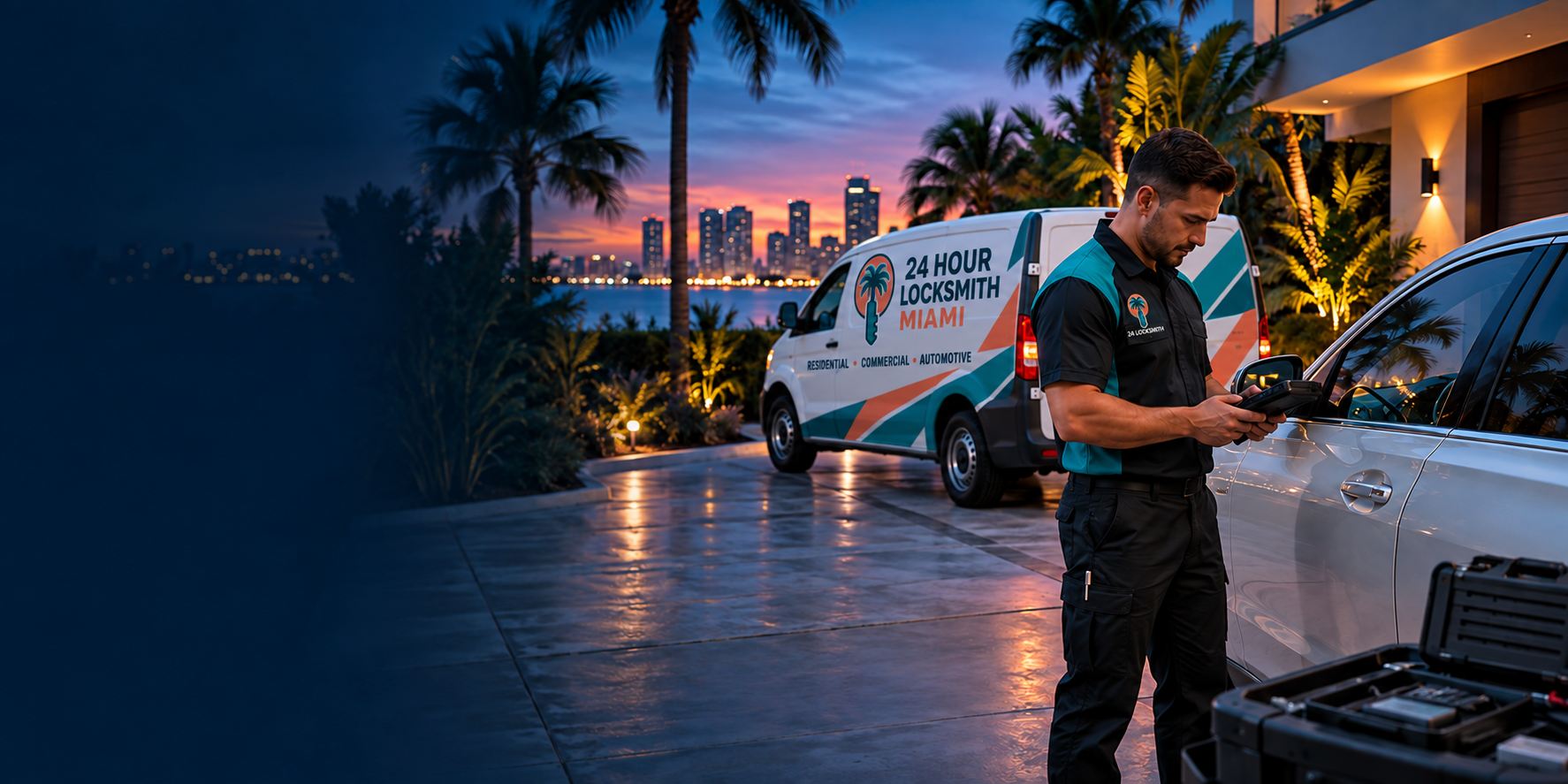
Why a spare key is a different job than a lost key
When a car owner calls about a spare key, the situation is almost always calm. The car is in the driveway or the garage, a working key is in your hand, and nobody is standing in a parking lot in the heat waiting for help. That is exactly why this is the best time to do it. A working key gives the technician something to work with, and it keeps the job small.
When every key is lost, the job changes. The technician has to start from the vehicle itself, confirm that you own it, work out the key type from the car, cut a new key from scratch, and then introduce that key to the car's computer without any existing key to lean on. Depending on the make and model, that can mean a longer visit, more equipment, and a quote that has more moving parts. Adding a spare while you still hold a good key is usually the simpler path.
Think of a spare as insurance that costs less in time and stress than the emergency version. You are not buying a new car feature. You are making sure that one lost key, one key dropped in the water at the marina, or one key left in a pocket at the beach does not leave you stranded. Our page on replacing a car key when all keys are lost explains the harder version of this job so you can see the difference for yourself.
What programming a spare key actually means
Most cars built in the last couple of decades do not rely on metal alone. The key blade has to match the ignition or door lock, but the car also looks for a small electronic chip in the head of the key, or for a signal from a remote or a smart fob. If the car does not recognize that signal, the engine will not start, even if the blade turns the ignition perfectly. This is the anti-theft system doing its job.
Programming a spare is the process of teaching the car to accept a new key. The technician connects diagnostic equipment to the car, puts the vehicle into a mode where it will accept a new key, and registers the new chip or fob. Once registered, the car treats the new key as one of its own. Some vehicles also need the remote buttons paired separately so that lock, unlock, trunk and panic work from the new fob.
There are really three separate parts to a spare key, and it helps to know them because the quote and the time depend on them. First is the mechanical cut, which makes the blade fit the lock. Second is the chip or electronic identity, which the car's immobilizer must accept. Third is the remote function, which handles buttons and keyless entry. A simple older key might only need the first two. A push-button start fob mostly needs the electronic pairing and no cut at all. Our page on transponder key programming basics goes deeper into the chip side.
Which vehicles and key types are usually involved
Key types vary a lot across the cars you see on Miami roads, from small commuter cars to trucks, vans, imports and luxury models. The practical way to sort them is by what the key looks like and how the car starts.
A metal blade key with a plastic head. The head holds a chip. The car reads it when the key is in the ignition. These are the classic transponder keys, and spares usually involve cutting the blade and pairing the chip.
A flip key or a key with built-in remote buttons. The blade folds into the fob. The fob has a chip and also controls the locks. A spare needs a cut blade, chip pairing and remote pairing.
A smart key or proximity fob. You carry it in a pocket or bag and push a button to start the car. It has a hidden emergency blade inside. A spare is mostly about pairing the fob to the car, and the emergency blade is cut as a backup. See our page on smart key fob replacement for that side of the work.
A laser-cut or high-security key. The blade has a milled track rather than edge teeth. It needs precise cutting equipment, and not every key shop has the right machine.
Whether a particular vehicle can be done quickly, whether it needs a manufacturer-specific procedure, and whether a new key can be made on site all depend on the exact make, model and year. That is why the first question on the phone is always the vehicle details, and why a technician will not promise a result before hearing them.
What to have ready before you call
A good call starts with good information. The more precisely you can describe the car, the more accurate the answer. Gather these before dialing, and you will shorten the conversation and avoid surprises at the door.
A technician will normally ask for the following.
The vehicle make, model and approximate model year. The year matters because key systems often change in the middle of a model's life.
The type of key you have now. Is it a plain metal key, a key with a plastic head, a flip key, or a push-button start fob? A clear description or a photo of the key helps.
How many working keys you currently have. If you have one, say so. If you have two and want a third, say that too. A car with more than one working key is sometimes easier to work with.
Where the car is parked. If it is in a locked garage, a condominium garage, or a gated lot, mention access rules that might affect where the work can happen.
Whether the car runs normally now. A weak battery, a warning light or a recent repair can affect programming, and the technician needs to know before arriving.
- Photo of the key you already have, front and back
- The car itself, since programming is done at the vehicle
- Your photo identification
- Proof that you own or are authorized to use the vehicle
- Any remote or fob you already have, even if it is not working well
Proof of ownership is part of the job
A responsible locksmith will ask who you are and whether the car is yours, and that can feel like an obstacle when you are in a hurry. It is actually a protection for you. A new key to your car is a way to drive it away, so a professional should not make one for anyone who simply asks.
Expect to show photo identification. Expect to show something that connects you to the vehicle, such as the registration or title, or a rental or lease paperwork that shows you are authorized. If the vehicle is owned by a company, a document or message from the company may be needed. If it is a family car and the registration is in another family member's name, bring that person's authorization if possible and tell the dispatcher in advance.
This is also a good test of the business you are calling. A provider who will program a key without any question about who you are, or who tells you ownership does not matter, is cutting a corner that could hurt you later. Our page on proving ownership for a car key explains what documents usually work and what to do if some are missing.
If your name and the document do not match, for example after a recent purchase or a move, say so at the start. Many situations have a workable path, but the technician needs to know the facts before deciding what is appropriate.
How the visit usually goes, step by step
Understanding the sequence removes most of the worry. Here is how a spare key visit generally unfolds, so nothing about it feels like a mystery.
On the phone, you describe the car and the key. You are told that quotes are given by phone, and that a service call charge applies and will be explained before anyone is dispatched. For many spare key jobs, a clear phone quote is possible once the vehicle details are known. If the vehicle or the key type turns out to be unusual, the technician may need to look at it in person before committing to a final figure, and you approve before work starts.
At the car, the technician confirms identity and ownership, looks at the existing key and the vehicle, and confirms the key type. Then the new key blank is prepared. If a blade needs to be cut, it is cut to match. If the chip or fob needs pairing, the diagnostic equipment is connected to the car and the registration is performed. The technician then tests the new key several ways: does it unlock the door, does it turn the ignition or start the car with the button, and do the remote buttons work.
Finally, the technician should show you that both keys work, explain what was done, and hand over the paperwork. Test it yourself before they leave. Start the car with the new key, turn it off, and start it again. Lock and unlock with the buttons from a short distance. If something is not right, it is far easier to sort out while the technician is still there.
What a spare key will and will not do
A spare key is a second way into your car. It is useful, but it is not a magic fix for every key problem, and it helps to be clear about its limits.
A spare will let you and another driver both use the car, and it will give you a backup if one key is lost, bent, or not working. It does not repair a worn ignition cylinder. If your current key sticks in the ignition or turns with difficulty, a new key may feel better at first but the underlying wear will remain. Our page on worn ignition cylinder repair explains how to tell the difference.
A spare does not cancel a lost key either. If the original key was stolen, a new spare does not stop the thief from using it. In that case, the car's computer can often be told to forget old keys and accept only the ones you present now. That is a separate decision to bring up with the technician, and it matters when a key was taken along with a purse, a wallet, or a bag.
A spare also does not promise that the remote range or the battery life will match the original. Aftermarket and manufacturer-made parts can differ. Ask which type is being used and what that means for how the key behaves. Be skeptical of any statement that a copy is identical in every way, since that is not always true.
Choosing between a bare copy and a properly programmed key
Key shops, hardware stores and online sellers all offer key blanks and fobs, and it is tempting to buy one and hope for the best. Sometimes it works, and often it does not, and it is worth understanding why before you spend money.
A blank cut to the right shape can open the door and turn the ignition without ever starting the engine, because the chip inside is not recognized. A key that is mechanically copied but not electronically paired is a common source of frustration. The car looks like it should start, the dash lights come on, and then the engine will not turn over or the security light flashes.
Online fobs vary widely. Some are good, some are the wrong frequency or the wrong chip family for your exact car, and some cannot be paired at all. A technician cannot fix a part that is simply not compatible. If you already bought a fob online, tell the dispatcher before the visit. Bring it along, and be ready for the possibility that the technician needs to use a different one.
The safest approach is to let the provider supply the key and the programming as one job, so that if something does not work, there is one party responsible for making it right. Ask who supplies the parts, and ask what happens if the key does not pair. Those two questions tell you a lot about how a business operates.
Sun, heat and salt: what Miami does to keys
Cars and keys in South Florida live a hard life. Heat inside a parked car can be extreme, and plastic key heads and fob cases can become brittle or warp over time. Humidity and salt air, especially near the water on Miami Beach, Key Biscayne and the bayfront neighborhoods, can corrode metal contacts and battery terminals inside a fob. A key that gets wet and is left in a pocket or a beach bag can stop working.
These are practical reasons to make a spare earlier rather than later. A key that has been going through the wash, been left on a dashboard, or been carried to the beach every weekend is a key close to the end of its life. If the original fob is starting to behave oddly, with buttons that work only sometimes, a cracked case, or a short range, treat that as a hint.
A few habits help. Keep the spare somewhere cool, dry and safe at home, not in the car. Do not leave the only fob in a hot glove box. Keep it away from strong magnets and from water. If a fob does get wet, take out the battery if you can and let it dry before using it again, and do not try to speed up the drying with high heat. See our page on key fob batteries and reprogramming for how to tell a weak battery from a failed fob.
If you share a car with a family member, think about who keeps which key. Two keys in two different places are much safer than two keys on the same ring.
Planning the spare: practical questions to ask
A short list of questions turns the phone call into a clear plan. Ask them calmly, and listen for direct answers.
Can this key be made and programmed at my location, or does the vehicle need to be taken somewhere? Some systems are not suited to roadside work, and a straight answer is better than a vague one.
What will it cost, and what does that figure include? Quotes are given by phone, and you should hear what is covered. Be wary of any offer that sounds oddly low and has no explanation, since a low opening figure that grows at the door is a known tactic.
What do I need to show? You will be asked about identification and ownership. A clear answer on this means the provider takes it seriously.
Do I need to stop using my current key during the work? Usually you do not, but the technician may ask for it.
What if the new key does not work? You should hear a plain explanation of how problems are handled, not a promise that nothing can go wrong.
Should the old keys be erased from the car? If one was lost or stolen, say so. If not, you can usually keep all existing keys active.
Make the call while things are calm
The best day to add a spare key is a day when you are not in trouble. You have time to gather your documents, the car is where you can reach it, and you can compare answers without pressure. A spare takes a small amount of planning and removes a large amount of risk.
Check your keys today. Count them. Look at the condition of the head of the key, the buttons, and the battery response. If you only have one, that is the reason to call. If your only fob is cracked or unreliable, that is another reason. If the car is used by more than one person in the household, that is a third.
Have the vehicle details and your documents ready, and call to ask about a spare key. You will get a straight explanation of what is involved for your make and model, what the service call charge covers, how the visit would work, and what to bring. If a technician needs to see the vehicle before giving a final figure, you will be told that plainly and nothing will be done without your approval.
Questions people ask
Do I need to have my current key to make a spare?
Usually it helps a lot. A working key lets the technician confirm the key type and often makes the programming simpler. If you have no working key at all, the job is treated as an all keys lost situation, which can need different equipment and more verification. Tell the dispatcher honestly how many working keys you have so the right approach is planned from the first call.
Can the new key be made at my home or workplace?
In many cases, yes, because the programming equipment is portable. Whether it can be done at your location depends on the make, model, year and key type, and some vehicles need a different procedure. Describe the car on the phone and ask directly. You should get a plain answer about what can be done on site and what cannot.
Why do I have to prove I own the car?
A new key is a way to drive the vehicle away, so a responsible technician checks who is asking. Photo identification plus registration, title or lease paperwork is the usual combination. This protects you as the owner. A provider who skips the check is cutting a corner that could cause problems for you.
Will a spare key stop a lost key from being used?
Not by itself. Adding a key lets the car accept another key, but the lost one may still work. If a key was stolen or lost somewhere worrying, ask the technician whether the car's stored keys can be reset so only the keys you present are accepted. That depends on the vehicle, and it is worth raising early.
Is it safe to buy a fob online and have it programmed?
It can work, but compatibility varies widely. A fob that is the wrong type for your exact car cannot be paired, no matter how skilled the technician is. If you already own one, mention it on the phone and bring it. Be ready for the technician to recommend a different part, and ask who is responsible if the key does not pair.
How long does a spare key visit take?
That depends on the vehicle and key type, so no one can honestly give a fixed time for every car. A technician can describe the steps once the make, model and year are known, and can tell you whether the job involves cutting a blade, pairing a chip, pairing remote buttons, or all three. Ask about this on the call.
Describe the situation by phone and we will tell you what the job involves. Quotes are given by phone. Jobs that cannot be quoted without seeing them need a technician on site, and the service call charge is explained on the phone before anyone is dispatched.
(786) 539-3980Related pages
Written by Claude (AI) (AI) for 24 Hour Locksmith Miami.